
Hotel Brand Consistency Across Touchpoints
Hotel brand consistency across touchpoints means a guest feels the same brand experience everywhere they interact with your hotel, from the booking page and pre-arrival emails to the lobby, rooms, uniforms, and on-site service.
You get that consistency by writing clear brand standards for visuals, messaging, and service behaviors, then teaching them through training, SOPs, and step-by-step playbooks that help every team member act with confidence during real guest moments.
To keep multiple locations aligned, rotate key staff through cross-training, run a repeating internal audit to score digital channels and physical touchpoints, and use the same core systems and support rules online so updates roll out with clear guest communication and quick retraining.
Inconsistent Experiences Break Trust Before Guests Even Check In
When a guest sees one vibe on the website and a different vibe in the lobby, the mismatch feels personal. That is how brand drift starts across locations, channels, and seasons, even when everyone means well.
Achieving hotel brand consistency across touchpoints is not about looking identical. It is about keeping the same promise, from booking flow and signage to service tone, room details, and the ambience guests remember. Once expectations are trained, every inconsistency becomes louder.
Document Brand Standards That Everyone Can Actually Follow
Consistency begins with clear documentation that the whole company can use. A practical brand standard pack covers visuals like logo usage, colors, and typography, then moves into voice and messaging guidelines so staff speak with the same rhythm across properties.
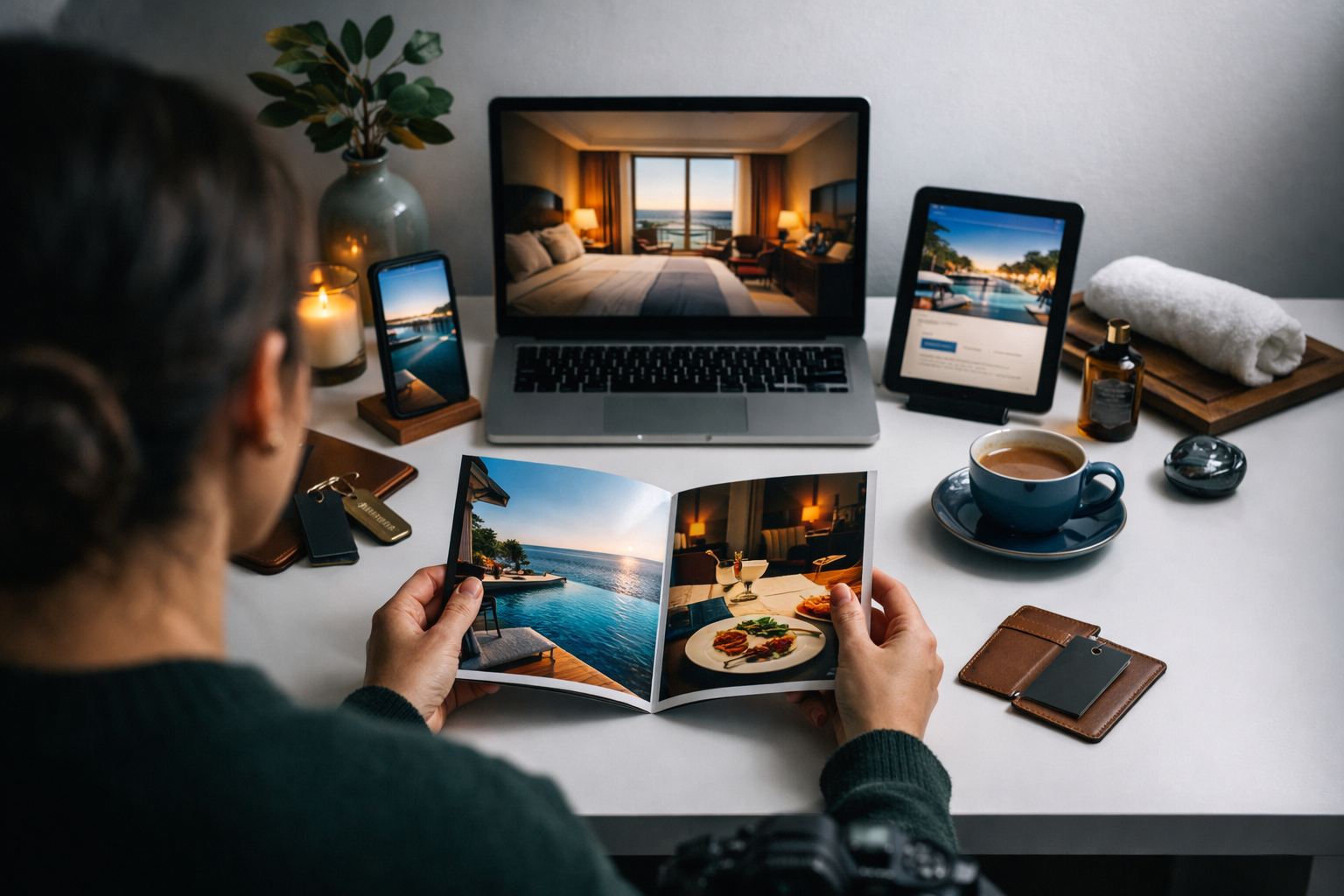
Next, include operational service standards guests feel in real moments. That means guest interaction protocols, service scripts, room and uniform standards, and F&B requirements. It also includes ambience details like scent, music, lighting, and signage so each property delivers the same sensory direction.
| Standard Area | What To Document | Measurable Check |
|---|---|---|
| Visual Identity | Logo, color codes, type rules | Brand asset approval rate 95%+ |
| Guest Voice | Do and don’t phrases | Script compliance in audits 90%+ |
| Check-In Flow | Step order and timing | Avg. wait under 5 minutes |
| Room Standards | Bed, linens, amenity placement | Photo review pass rate 98% |
| Ambience | Scent, lighting levels, music volume | Quarterly guest feedback score 4.5+ |
To make the standards usable, turn them into “single-source-of-truth” references. A short summary can guide day-to-day decisions, while a deeper playbook supports managers during rollouts and refreshes.
Turn Standards Into Training, SOPs, and Real On-The-Job Scripts
Documentation helps, but training makes it stick. Build structured employee onboarding with step-by-step tools and checklists that map to the standards, including how to greet guests, how to handle requests, and how to recover when something goes wrong.
For service scripts, keep them flexible enough for natural conversations while still protecting brand tone. A front desk agent should know the same “what we say, how we say it, and what we never say,” and that guidance should match the property’s physical standards like signage, room cues, and uniform expectations.
For multi-location alignment, run cross-training and shift exchanges that rotate key employees between sites. When people experience “the same way of doing things” in more than one property, brand ambassador behavior becomes a habit, not a policy.
Align Digital Touchpoints and Sustain Consistency With Audits and Governance
Guests do not experience the brand only inside the hotel. Extend the same rules to digital channels by aligning website, booking platforms, and social media design with the in-hotel look and tone. Digital customer support conduct should match the service standards, including response style and escalation steps.
Keep the tech stack uniform across properties so operational workflows feel consistent. That means using the same booking system, integrated property management for booking and billing workflows, and a unified CRM that records guest preferences and history. When phased changes happen, such as self-check-in rollouts, use shared indicators and clear guest-facing communication so expectations match the moment they arrive.
Finally, sustain improvements with a repeatable audit cadence. Conduct internal audits quarterly or semi-annually to score touchpoints across digital channels, physical spaces, and guest feedback, then track corrective actions with centralized reporting for regional leadership. Use centralized governance tools like digital asset management for approved photos and videos, unified reporting dashboards for KPIs, and retraining during rollouts so staff updates arrive before new standards appear on property screens and in guest messages.
Hotel Brand Consistency Across Touchpoints Across All Sites and Channels
How Do You Set Brand Standards That Cover Every Touchpoint in a Hotel?
Start by documenting clear, company-wide brand standards for visuals, guest-facing messaging, service behavior, and physical details like rooms, uniforms, and ambience, then train staff with onboarding, step-by-step SOPs, and ongoing refreshers so every team member follows the same rules across properties.
How Do You Maintain Consistency Across Digital Channels and On-Site Operations?
Align the website, booking flow, and social media design and tone with the in-hotel experience, standardize guest support scripts, and keep key systems consistent across sites, then use regular internal audits and guest feedback to track gaps, assign fixes, and retrain teams when updates roll out.
Keeping Hotel Brand Consistency Across Every Touchpoint Pays Off
Hotel brand consistency across touchpoints works best when the company first sets clear standards for look, voice, and guest-facing service, then trains staff with practical SOPs so every property delivers the same experience. It also helps to align digital channels with the in-hotel brand, run regular audits across physical and online touchpoints, and use feedback plus centralized reporting to spot gaps early and correct them consistently across locations.