
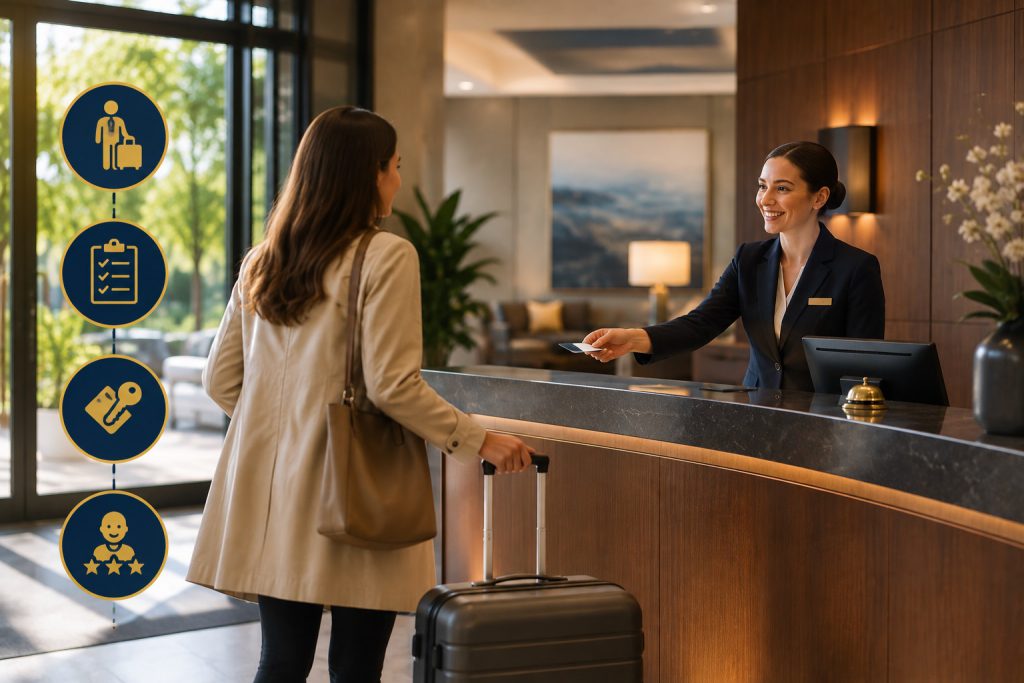
Guest Expectations During the First 10 Minutes of Arrival at a Hotel: A Complete Guide for Hospitality Professionals
The First 10 Minutes Can Determine the Entire Guest Experience
The first 10 minutes after a guest arrives at a hotel are the most influential moments of the entire stay. During this brief window, guests form opinions about the hotel’s professionalism, cleanliness, service standards, efficiency, and attention to detail.
A warm welcome, fast check-in, personalized interaction, and smooth transition to the room immediately build trust and confidence.
For hotels, resorts, serviced apartments, and boutique properties, delivering an outstanding arrival experience leads to higher guest satisfaction, stronger online reviews, increased loyalty, and more repeat bookings.
This guide explains exactly what guests expect during their first 10 minutes and how hotel teams can consistently exceed those expectations.
Why the First 10 Minutes Matter
Summary: Guests decide whether they feel welcome long before they enter their room.
Hospitality is an emotional business. While room quality, food, and amenities matter, the arrival experience often shapes how guests perceive everything that follows.
During the first few minutes, guests subconsciously ask themselves:
- Is this hotel organized?
- Are the staff genuinely welcoming?
- Will my stay be comfortable?
- Did I make the right booking decision?
- Can I trust this property?
Positive answers to these questions reduce travel stress and create confidence.
Negative first impressions, however, can linger throughout the stay—even if later experiences are excellent.
The Psychology Behind Guest Arrivals
Summary: Most arriving guests are physically tired and mentally overloaded.
Many guests have just completed:
- A long flight
- Several hours of driving
- Airport security procedures
- Business meetings
- Family travel
- Delayed transportation
- International travel across time zones
By the time they reach the hotel, they are often carrying physical luggage and mental fatigue.
What they value most is simplicity.
Guests want the hotel to remove stress—not create more of it.
What Guests Expect Within the First 60 Seconds
Summary: Recognition comes before service.
The moment guests enter the lobby, they expect to be acknowledged.
Ideal arrival behaviors include:
- Friendly eye contact
- Genuine smile
- Immediate greeting
- Professional appearance
- Staff availability
Even if reception staff are busy, a simple acknowledgment such as:
“Welcome. We’ll be with you in just a moment.”
prevents guests from feeling ignored.
Ignoring arriving guests is one of the fastest ways to create a poor first impression.
Expectation 1: A Warm and Genuine Welcome
Summary: Hospitality begins with human connection.
Guests remember how they were treated more than what was said.
A memorable welcome includes:
- Positive body language
- Calm tone of voice
- Natural conversation
- Professional confidence
- Genuine enthusiasm
Excellent front office staff make guests feel expected rather than processed.
Expectation 2: Fast, Efficient Check-in
Summary: Guests appreciate speed without sacrificing accuracy.
Nobody enjoys waiting after a long journey.
An efficient check-in should include:
- Reservation confirmation
- Identification verification
- Payment authorization
- Key card preparation
- Brief explanation of services
For most hotels, completing check-in in under five minutes is an excellent benchmark.
Technology such as online pre-check-in, digital registration, and mobile keys can make the process even smoother.
Expectation 3: Personalized Service
Summary: Small personal touches create lasting memories.
Guests value recognition.
Examples include:
- Greeting guests by name
- Welcoming returning visitors
- Thanking loyalty members
- Recognizing birthdays or anniversaries
- Confirming special requests
Instead of asking:
“Smoking or non-smoking?”
staff should already know the preference whenever possible.
Preparation demonstrates professionalism.
Expectation 4: Confidence and Professionalism
Summary: Guests want reassurance they are in capable hands.
Reception staff should appear:
- Organized
- Knowledgeable
- Calm
- Friendly
- Well-groomed
Guests quickly notice hesitation or confusion.
Confidence reassures guests that any issue will be handled efficiently.
Expectation 5: Assistance with Luggage
Summary: Convenience is part of hospitality.
Offering luggage assistance shows attentiveness.
Hotels should:
- Offer assistance proactively.
- Explain luggage delivery if bell staff are unavailable.
- Escort guests when appropriate.
Luxury hotels are expected to provide full luggage assistance, while select-service hotels should still make assistance available on request.
Expectation 6: Clear and Relevant Information
Summary: Guests want answers—not lengthy explanations.
During arrival, guests usually need only essential information.
This includes:
Internet Access
- Wi-Fi name
- Password
- Login instructions
Dining
- Breakfast location
- Service hours
- Restaurant reservations
Facilities
- Swimming pool
- Fitness center
- Spa
- Business center
Guest Services
- Housekeeping
- Room service
- Concierge
- Parking
Departure
- Check-out time
- Express check-out options
Avoid overwhelming guests with unnecessary details during check-in.
The Lobby Creates Expectations
Summary: Guests evaluate the property before seeing their room.
The lobby communicates the hotel’s standards.
Guests notice:
- Clean floors
- Fresh fragrance
- Comfortable temperature
- Lighting
- Background music
- Comfortable furniture
- Organized reception desk
- Staff appearance
An inviting lobby reassures guests that the same standards continue throughout the property.
Room Readiness Matters
Summary: Guests expect immediate access to their room whenever possible.
Nothing disappoints travelers more than hearing:
“Your room isn’t ready.”
If delays are unavoidable, hotels should:
- Apologize sincerely.
- Explain the situation honestly.
- Offer refreshments if appropriate.
- Provide an estimated wait time.
- Update guests regularly.
Transparency reduces frustration.
Handling Problems During Arrival
Summary: Excellent service is measured by recovery.
Problems occasionally occur.
Examples include:
- Booking errors
- Incorrect room type
- Payment issues
- Maintenance problems
- Overbooking
Guests do not expect perfection.
They expect professionalism.
The best recovery process includes:
- Listen carefully.
- Apologize sincerely.
- Take ownership.
- Offer realistic solutions.
- Follow up promptly.
Successful recovery often strengthens guest loyalty.
Escorting Guests to Their Room
Summary: The arrival journey should feel effortless.
Depending on the property’s service level, staff should:
- Escort guests.
- Point out facilities.
- Demonstrate room features.
- Explain air conditioning.
- Show safe operation.
- Confirm Wi-Fi access.
This reduces confusion and minimizes calls to reception.
Emotional Needs During Arrival
Summary: Hospitality is about how guests feel.
Beyond efficiency, guests want to feel:
- Welcome
- Safe
- Appreciated
- Comfortable
- Relaxed
- Respected
- Valued
Hotels that satisfy emotional needs consistently outperform those that focus only on operational efficiency.
Common Arrival Mistakes Hotels Should Avoid
Summary: Small mistakes create disproportionate dissatisfaction.
Avoid:
- Ignoring guests
- Long waiting lines
- Poor eye contact
- Staff conversations while guests wait
- Dirty reception areas
- Excessive paperwork
- Giving too much information
- Failing to recognize repeat guests
- Unprepared room keys
- Lack of luggage assistance
Many negative online reviews begin with one of these avoidable issues.
Best Practices for Hotel Teams
Summary: Consistency is more important than perfection.
High-performing hotels train staff to:
- Welcome every guest warmly.
- Acknowledge waiting guests.
- Complete check-in efficiently.
- Personalize interactions.
- Anticipate guest needs.
- Communicate clearly.
- Resolve issues immediately.
- End every interaction positively.
These behaviors become part of the hotel’s service culture.
First 10-Minute Guest Arrival Checklist
| Time | Guest Expectation | Hotel Action |
|---|---|---|
| 0–1 minute | Warm welcome | Smile, greet, acknowledge immediately |
| 1–3 minutes | Efficient check-in | Verify reservation and identification |
| 3–5 minutes | Smooth registration | Payment, key issuance, confirmation |
| 5–7 minutes | Essential information | Wi-Fi, breakfast, facilities, check-out |
| 7–10 minutes | Comfortable transition | Luggage assistance and room guidance |
Key Performance Indicators (KPIs)
Hotels can measure arrival quality using:
- Average check-in time
- Guest satisfaction score
- Front Office review ratings
- Welcome satisfaction survey
- Online review sentiment
- Repeat guest percentage
- Loyalty member satisfaction
- Complaint rate during arrival
Monitoring these indicators helps identify opportunities for improvement.
Frequently Asked Questions
How long should hotel check-in take?
Ideally, less than five minutes for guests with confirmed reservations.
Why is the first impression so important?
Guests form lasting opinions within minutes, influencing their satisfaction, reviews, and likelihood of returning.
What do luxury hotel guests expect?
Luxury travelers typically expect personalized greetings, luggage assistance, seamless check-in, room escorts, and proactive service.
What is the biggest mistake during guest arrival?
Failing to acknowledge arriving guests or making them wait without communication.
Final Thoughts
The first 10 minutes of arrival are not simply an operational process—they are the foundation of the guest relationship. Every greeting, smile, conversation, and interaction contributes to how guests perceive the entire stay.
Hotels that consistently deliver a warm welcome, efficient check-in, personalized service, clear communication, and proactive assistance create memorable first impressions that translate into better reviews, stronger guest loyalty, and increased revenue.
When guests leave the reception desk feeling welcomed, respected, and confident, the hotel has already achieved one of its most important goals: turning a reservation into a positive experience.
When guests leave the reception desk feeling welcomed, respected, and confident, the hotel has already achieved one of its most important goals: turning a reservation into a positive experience.